Venue planning · Procurement guide
How to Choose Interactive Entertainment Equipment for Tourist Attractions
A tourist attraction does not need another machine simply because it looks impressive in a brochure. It needs an experience that visitors can understand quickly, enjoy safely, and share with the people they came with—without creating an unreasonable workload for the venue team.
For purchasing managers, the challenge is therefore broader than choosing a screen, cabinet or payment terminal. The equipment must fit the audience, the setting, the local operating conditions and the day-to-day realities of the venue.
This guide presents a practical evaluation framework for destination operators considering interactive kiosks, cultural experience equipment and other self-service entertainment installations.
1. Start with the visitor experience
Before comparing models, write down what visitors are supposed to do in the first 30 seconds. Can someone walking past understand the invitation without a staff member explaining it? Is the interaction suitable for an individual, a couple or a family group? Does the result give the visitor something memorable?
Consider four questions before choosing a configuration.
- Attraction. What will make visitors stop and look?
- Clarity. Can a first-time visitor understand the next action from a sign or short on-screen instruction?
- Participation. Is there a meaningful action, rather than only passive viewing?
- Takeaway. Does the experience produce a result worth keeping, discussing or photographing?
A simple interaction with a satisfying result can be more appropriate than a complicated attraction that requires constant staff assistance.
2. Match the experience to the location
The best installation for a shopping mall is not automatically the best choice for a cultural attraction or a resort. Assess the actual space and visitor flow before selecting equipment.
| Venue context | What to evaluate | Common planning concern |
|---|---|---|
| Tourist destination or cultural attraction | Thematic fit, multilingual visitor instructions, visitor circulation | Avoid blocking entrances and queues |
| Shopping mall or retail destination | Visibility, dwell time, power access and mall rules | Competing signs and high ambient noise |
| Theme park or family entertainment venue | Age suitability, supervision and ruggedness | Busy periods and frequent interactions |
| Resort or leisure complex | Guest experience, seasonal demand and service access | Maintenance response and on-site ownership |
Check floor loading, equipment footprint, available electrical supply, access routes, accessibility requirements and the venue's approval process. Do not assume a machine intended for indoor placement is suitable for unsheltered outdoor use. Ask the supplier for the exact environmental and installation requirements of the proposed configuration.
3. Understand the full interaction sequence
A useful procurement exercise is to map the entire visitor journey, from first impression to completion.
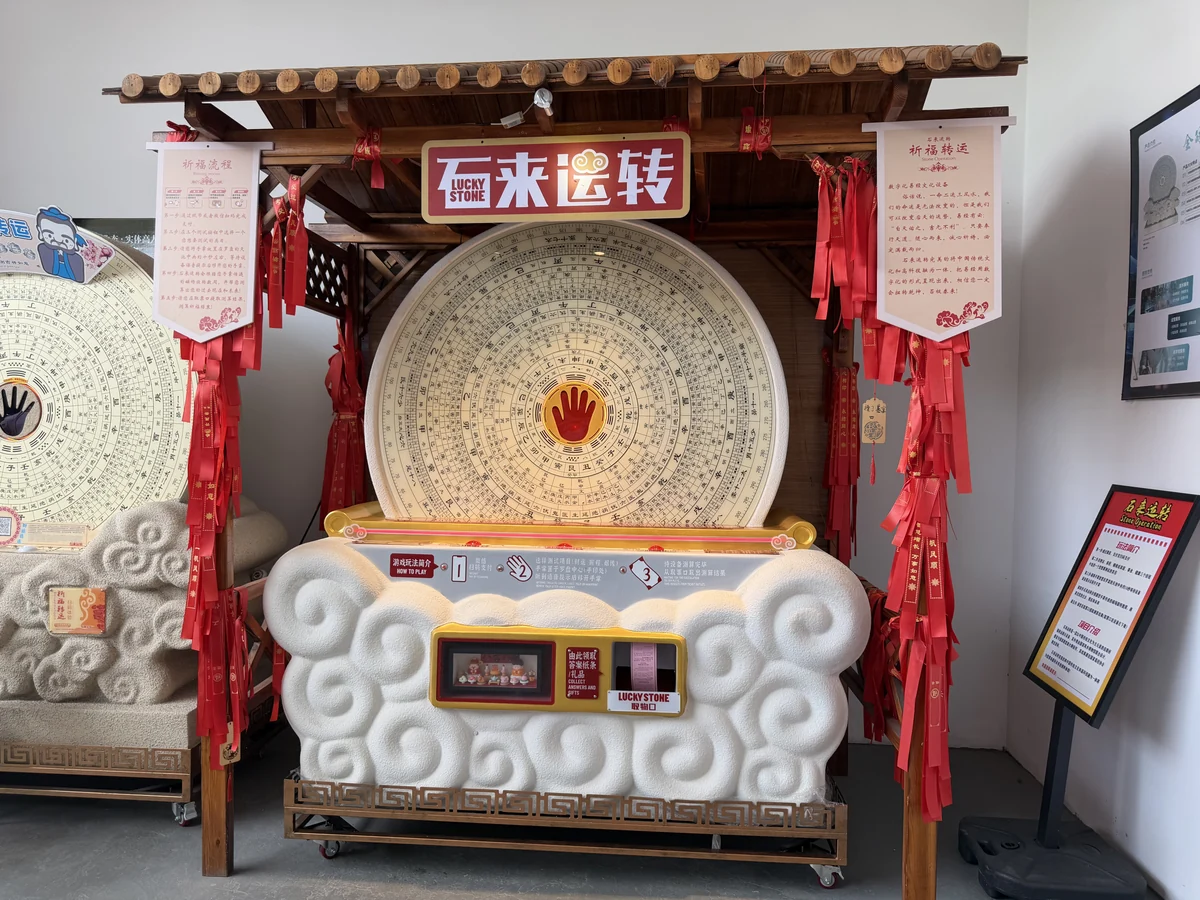
For example, Lucky Stone Lingji JH-768 is FORTUNEVEND’s pavilion-style cultural entertainment machine. Its fortune-inspired experience uses configured payment, palm sensing, full-wheel rotation and a printed result. Review the sequence and any selected options for your order.
- Pay. A visitor starts the experience using the configured payment method.
- Interact. The visitor places a palm on the sensor, followed by full-wheel rotation with the configured light and sound sequence.
- Discover. The machine provides a printed, fortune-style result.
- Reward. If gift dispensing is selected and confirmed in the order, the visitor collects the configured souvenir.
The themes may include wealth, future prospects and relationships. The concept is positioned as cultural entertainment, not as a guarantee of future outcomes.
This sequence matters commercially because it gives the visitor a clear beginning, action, result and ending. For other equipment categories, ask the supplier to demonstrate a similarly complete journey with real hardware—not just a rendered animation.
4. Compare operating requirements before comparing price
The purchase price is only one part of the decision. A buyer should also understand how a machine is refilled, cleaned, monitored and repaired.
Ask for practical answers to these operating questions.
- Operating hours. What happens when power or the network is interrupted?
- Connectivity. Which functions need Wi-Fi or cellular data, and which can work locally?
- Payments. Are coins, banknotes, card readers or other options available for this model and destination market?
- Consumables. Are printed slips, souvenirs or other supplies required, and how often are they replenished?
- Maintenance. Which components are accessible on site? What training is needed?
- Support. What can the venue operator troubleshoot remotely, and what requires a technician?
Ask for these details in writing. If a feature depends on an optional component or local payment-provider approval, it should be clearly identified as optional rather than assumed to be standard.
5. Plan the floor space and visitor flow
Large experiential machines may be effective as visual focal points, but that does not mean they can be installed anywhere. A project manager should request a dimensioned drawing showing machine width, depth, height, any canopy or surrounding structure, maintenance access and the space needed for the visitor to interact comfortably.
For a large-format installation, conduct a walkthrough with photographs and measurements. Review entry and exit points, queue behavior during peak periods, electrical access, potential trip hazards and the location of any printed output or souvenir pickup point.
For international projects, confirm packaging dimensions, shipping arrangements, unloading requirements and who is responsible for installation on arrival. These should be based on the exact selected unit, not assumed from a different product model.
JH-768 reference for early planning
The current specification gives the following reference values. Final dimensions, packing and equipment configuration are confirmed against the order drawing.
| Planning item | JH-768 reference |
|---|---|
| Reference width × depth × height | Approx. 190 × 85 × 220 cm; final order drawing applies |
| Reference weight | Approx. 260 kg; final configuration confirmed with your order |
| Reference rated power / voltage | 500 W / 220 V; destination power and plug options reviewed for your order |
| Packing length × width × height | 195 × 95 × 238 cm; packing method and gross weight confirmed before shipment |
| Reference production time | Approx. 10–15 days, excluding shipping; custom work scheduled separately |
Orders start from one machine, with volume quotations for ten or more. JH-768 has a reference production time of approximately 10–15 days, excluding shipping. Custom work is scheduled separately. The one-year machine warranty, coverage, start date, spare parts and support responsibilities are specified in the order.
6. Evaluate localization, accessibility and cultural fit
Entertainment based on stories, symbols and rituals can attract curiosity across cultures, but the user experience must be appropriate to the destination.
Review the language of instructions and printed content. Ask whether the on-screen text, voice guidance and printed material can be adapted. Confirm font rendering and line breaks in the actual target language. For venues with international visitors, instructions should be short, easy to follow and understandable without detailed cultural knowledge.
Also review age suitability, accessibility, privacy notices and applicable rules for entertainment, promotions and payments. If the experience includes a random item, distinguish a souvenir-based cultural experience from regulated gambling or prize promotions, and obtain local advice where necessary.
7. Judge the supplier by evidence and handover quality
A strong presentation should be accompanied by practical proof. Ask to see the actual equipment in operation, close-up photographs of the interface and service areas, a clear specification sheet and a breakdown of included versus optional components.
Useful supplier documentation includes a pre-shipment testing checklist, installation instructions, warranty terms, support channels and spare-parts arrangements. If a supplier mentions certifications or regulatory compliance, verify that the relevant documents apply to the exact configuration and destination market.
A supplier's history and projects can help establish confidence, but ask whether photographs are real installations, product photos or clearly identified concept imagery. An attractive AI-generated scene is not evidence of a completed deployment.
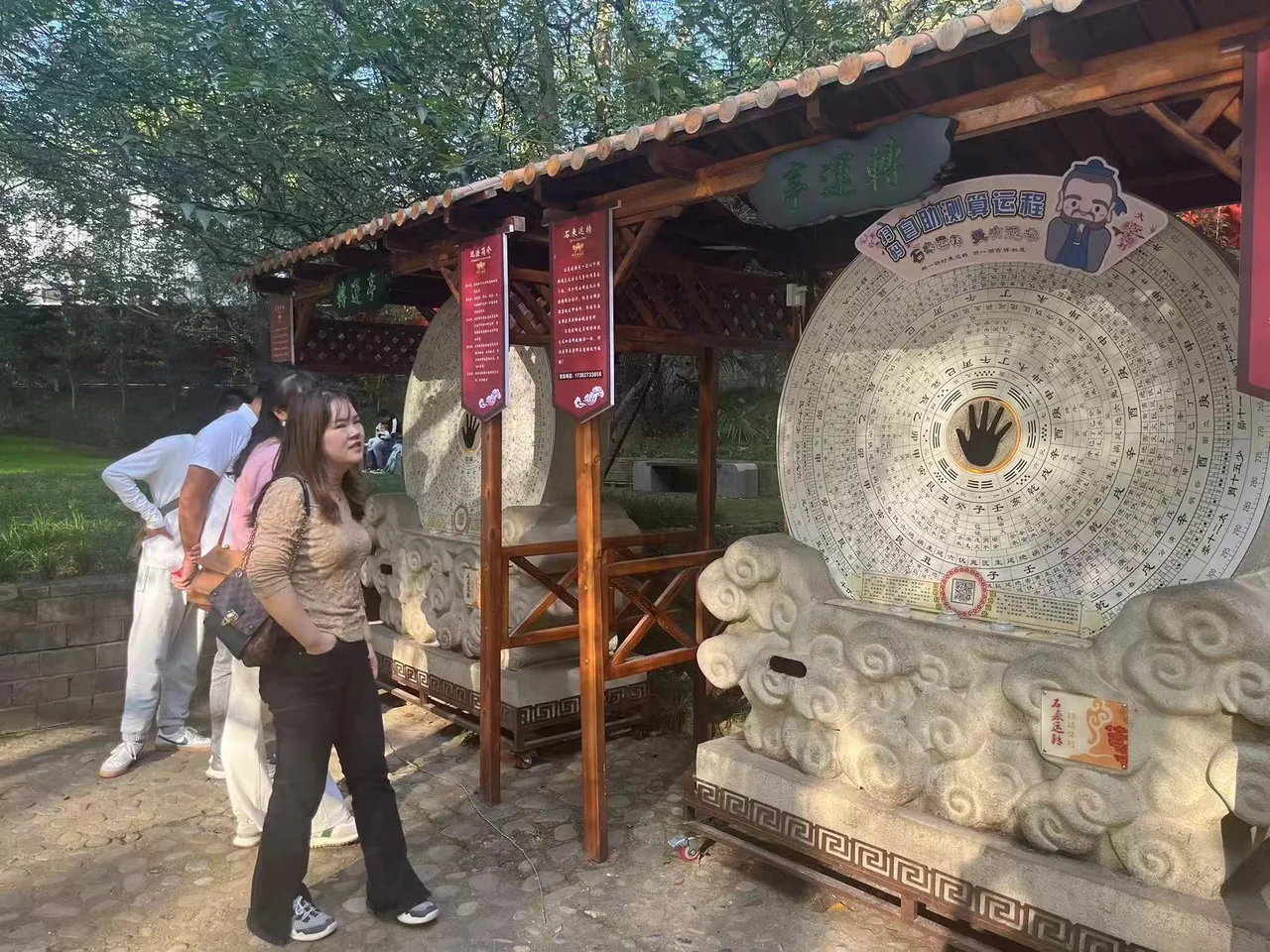
The Yuquan Mountain installation record identifies JH-168, a historical Large 7th Gen model. Use the current JH-768 product information and order configuration for a new pavilion-style machine purchase.
8. Assess value with a small operating model
A suitable pilot plan can be more informative than an optimistic sales projection. Estimate the expected interaction rate from the venue's own visitor numbers, then examine the costs of supplies, power, payment processing, cleaning, maintenance and any space fee.
Test different assumptions rather than presenting a guaranteed payback period. Demand varies by location, season, price point and visitor demographics. A short pilot with measured transactions and visitor feedback is often more useful than a generic forecast.
9. A practical procurement checklist
Confirm the following before approving a purchase.
- A live demonstration or documented test of the actual model.
- Accurate dimensions, power requirements and environmental limitations.
- A suitable location with approved access and visitor flow.
- A list of standard and optional payment, language and interaction features.
- Written consumables, maintenance, warranty and support arrangements.
- Confirmed shipping, unloading, installation and training responsibilities.
- Clear local compliance and venue approvals.
- A measurable operating plan and an accountable project owner.
Where Lucky Stone may fit
Lucky Stone is one option for venues seeking a self-service cultural experience rather than conventional product vending. Its fortune-inspired interaction and printed result, with optional gift dispensing, may suit tourist attractions, commercial entertainment environments and retail destinations where the theme is appropriate. Actual suitability depends on the site, configuration, permissions and operating plan.
To discuss a proposed location, share the venue type, country, available space, approximate visitor profile and preferred payment method. That gives the supplier a much stronger starting point than asking only for a price.
Discuss your attraction project
Share your country, venue, available space, preferred model and intended opening date.
For supplier and order checks, read A Distributor’s Checklist for Sourcing Self-Service Entertainment Machines.
Frequently asked questions
Can interactive entertainment equipment operate without dedicated staff?
Some formats support self-service visitor interactions, but operators still need a plan for restocking, cleaning, routine checks, payments and customer assistance. The required staffing level depends on the installation and operating conditions.
Can the interface and printed result be localized?
Localization may be possible for selected models. Confirm the specific languages, voice options, printed-content format and scope of translation before placing an order.
Can the equipment accept local cashless payments?
Potential payment options vary by hardware configuration, region and payment provider. Ask the supplier to confirm actual local compatibility and any third-party approval requirements.
Is this suitable for an outdoor tourist attraction?
Do not assume outdoor suitability. Request the model's environmental specifications, weather protection requirements and electrical installation guidance for the proposed site.
What information should I provide when requesting a quotation?
Include destination country, venue type, proposed location, approximate available floor space, quantity, required languages, payment preferences and desired installation schedule.