Shopping malls · Site & operations
Self-Service Entertainment Kiosks for Shopping Malls: What Buyers Should Know
A self-service entertainment kiosk needs to fit a shopping mall’s visitor route, presentation standards and operating routine. Choosing an interesting machine is only part of the purchase. The buyer also needs an approved location, workable payment, accessible service space and a clear handover to the people who will run it.
Start with a mall-ready site brief
Prepare a marked floor plan, photographs of the proposed space, delivery access, power and network information, and the intended visitor experience. Identify the landlord or mall team that must approve the placement. This guide uses Lucky Stone Lingji JH-768 as a real equipment example; it does not claim an existing FORTUNEVEND installation at a particular shopping mall.
1. Choose the experience you want to add to the mall
Shopping mall entertainment equipment serves a different purpose from an information terminal or a standard retail vending machine. Decide whether your proposed point should help shoppers find a store, sell a physical product or offer a paid leisure experience. That decision changes the content, waiting space, replenishment and customer-support requirements.
When comparing an interactive vending machine for a shopping mall, ask what the visitor actually pays for. A touchscreen and a payment device do not, by themselves, define an entertainment product. Watch the complete interaction and identify the result the visitor takes away.
Lucky Stone Lingji JH-768 is FORTUNEVEND’s core pavilion-style cultural entertainment machine. In the shown configuration, the visitor pays, selects a theme, places a palm on the sensor, watches full-wheel rotation with light and sound, and collects a printed result. Gift dispensing is an optional configuration. It provides a fortune-inspired cultural experience, without a promise of factual predictions or financial benefit.
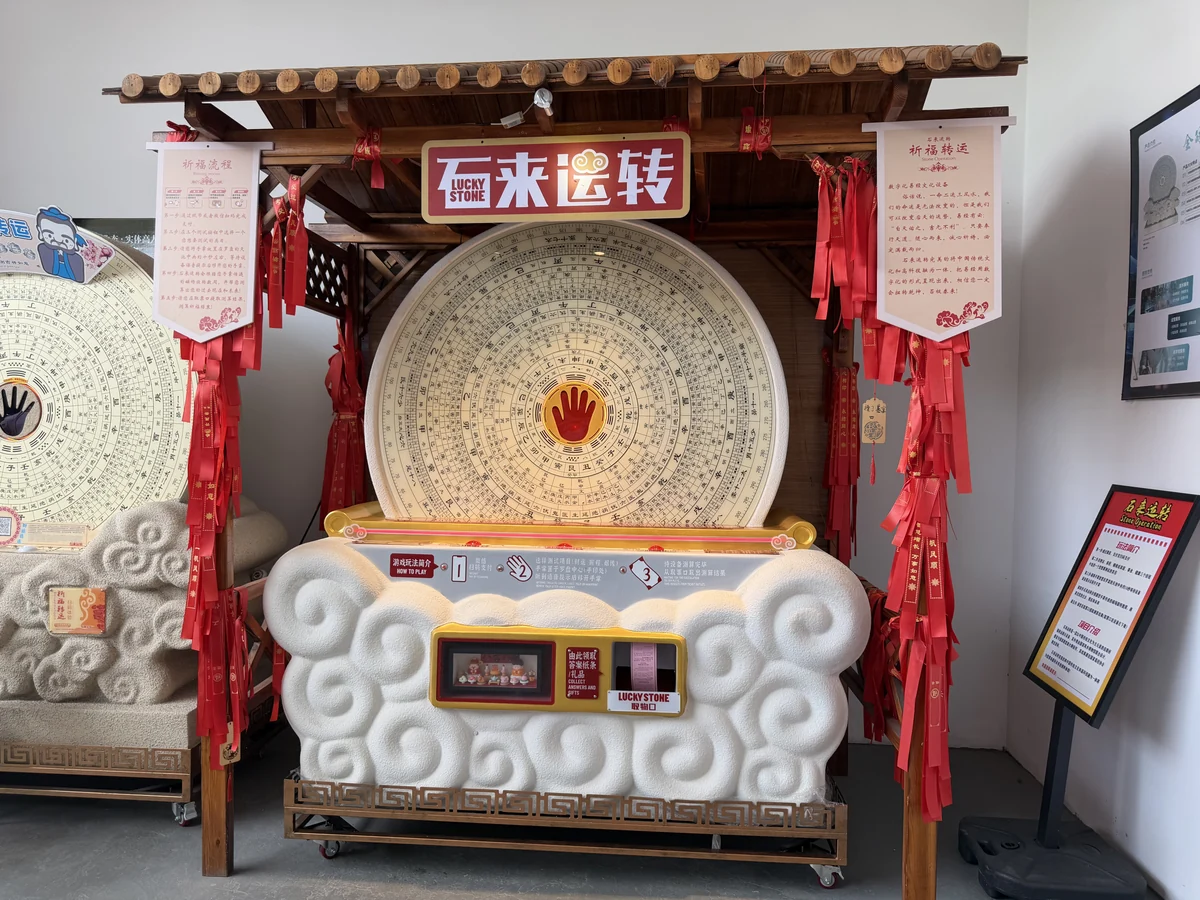
Review the JH-768 specification and purchase information when considering this format. If you are choosing between broad equipment categories for an attraction, the existing tourist-attraction equipment selection guide covers that earlier decision.
2. Draw the visitor and service areas around the machine
A machine footprint is not an approved kiosk area. On the floor plan, show where the visitor stands, where a companion might wait, how the printed result is collected and how staff open the service areas. Review the plan with the mall’s operations team, including circulation, accessible approach and emergency-route requirements for that property.
| Planning item | JH-768 reference or buyer action |
|---|---|
| Machine envelope | Approx. 190 cm wide × 85 cm deep × 220 cm high. Use the final order drawing, including roof and decorative projections. |
| Weight and positioning | Reference weight is 260 kg. Ask the property team to check the placement, handling route and any floor requirements; the number alone is not a floor approval. |
| Visitor area | Mark the approach, interaction position, result collection and potential waiting area. Agree the required clearances for the actual site. |
| Service area | Show access for paper and any gifts, panel opening and fault isolation. Keep that access workable when neighbouring units are open. |
| Power and network | Reference rated power/voltage is 500 W / 220 V. Confirm the actual power/plug and selected network configuration; a power rating is not a measured energy bill. |
| Light, sound and visibility | Assess the actual display, wheel movement, prompts and selected effects beside neighbouring tenants. Agree presentation and operating settings with the mall. |
A photograph can show appearance but cannot confirm whether a complete machine, packing crate and handling equipment fit through the goods entrance. Check door openings, turns, lift dimensions and capacity, overhead clearance and the final route to the position. Verify the selected unit’s final measurements before scheduling delivery.
Do not promise a universal minimum aisle width, sound limit or fire approval. Those decisions depend on the property and destination rules. Ask the responsible mall team and qualified advisers to review the actual proposal.
3. Give the mall an operating proposal, not just a product photograph
Find out who approves an entertainment installation at the specific property: leasing, common-area commercialization, design delivery or operations may have different responsibilities. GGP’s specialty-leasing guidance, for example, describes property-specific rental costs and possible additional expenses. It illustrates why a venue discussion is separate from the equipment purchase; its terms do not establish the terms of your mall.
- Concept: a short description of the cultural entertainment experience, intended audience, payment and printed output.
- Site presentation: a marked layout, real model photographs, overall dimensions and any proposed exterior artwork.
- Operation: opening and closing arrangements, refill access, a visitor help contact and a way to remove an unavailable machine from service.
- Commercial responsibilities: who buys and owns the equipment, who operates it, and who agrees rent, utilities, insurance and any venue revenue-sharing terms.
- Technical review: destination power, payment, connectivity, installation and any documents required for the selected configuration.
FORTUNEVEND supplies equipment against an agreed order. Mall placement permission, a lease or a venue revenue-sharing agreement are separate arrangements. Neither a machine quotation nor an attractive product image guarantees a placement, operating income or payback period.
4. Coordinate payment and content with the mall visitor journey
Choose payment after confirming the country, currency, provider and expected user flow. If cash or coins are requested, specify the exact requirement for assessment. If cashless payment is requested, establish who owns the merchant account, receives funds, pays provider fees and handles disputes. Do not assume the mall’s existing payment arrangement can be reused by a standalone machine.
Test payment at the actual location when possible, including signal and network availability. Ask the supplier to explain what happens during an interruption; do not assume offline payments, automatic refunds or remote monitoring are standard. The coin-operated machine buying guide provides a more detailed payment and acceptance checklist.
JH-768 has Chinese, English and Thai adaptation options. Confirm interface, voice and printed-result languages separately. The website’s nine languages do not mean the supplied machine includes nine languages. Review the natural wording, theme choices, instructions, price display and printed messages with people who understand the destination audience.
Playback could not start. Open the video file or try again.
Ask the mall to review sound, lighting and any optional effects before committing to them. A demonstration can establish what an effect looks like; it does not establish permission to use it beside every tenant or in every indoor environment.
5. Assign daily work before calling the kiosk self-service
Self-service describes the visitor interaction. It does not remove the need for cleaning, paper loading, payment assistance or maintenance. Build a short handover sheet that identifies an owner and a response for each task.
| Task | Handover requirement |
|---|---|
| Opening check | Confirm power, visitor instructions, agreed payment, printing and a clear approach before normal use. |
| Paper and optional gifts | Record the approved consumables, storage point, refill access and person responsible. Confirm capacities and replenishment intervals from the selected configuration and actual use. |
| Cleaning and inspection | Use the supplier’s instructions for the panel, sensor and exterior. Keep the output area clear and report damage or abnormal movement. |
| Visitor assistance | Provide a visible contact for payment questions, missing output and interruption. Agree refunds and escalation with the operator. |
| Fault and closure | Identify who can stop use, isolate equipment safely, contact support and authorize return to operation. |
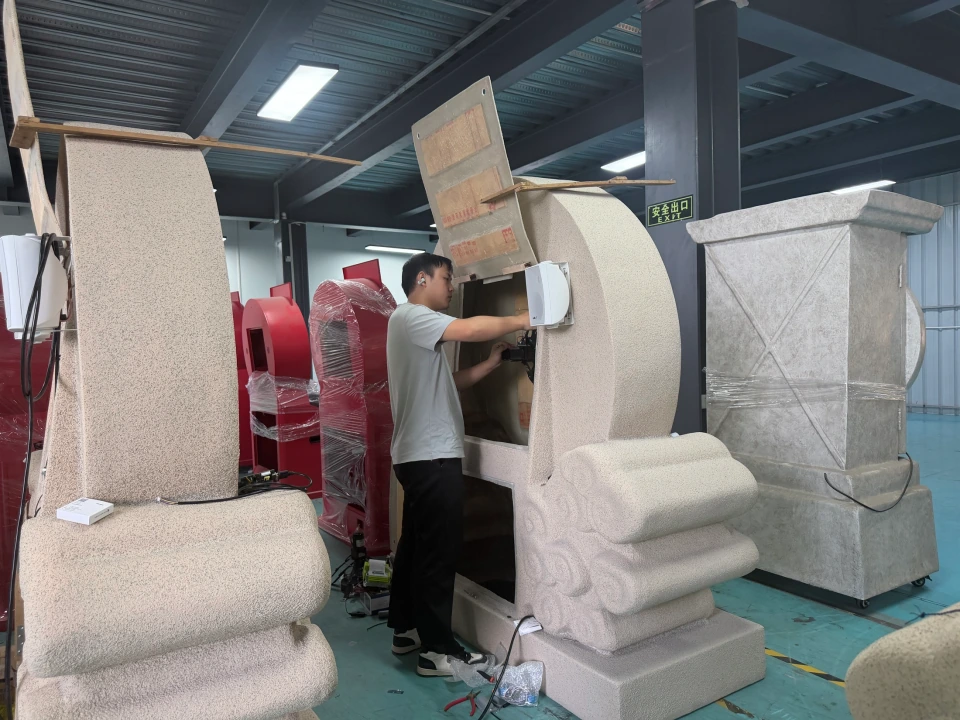
For Lucky Stone, the quotation and order should identify the included functions, consumables, warranty and support responsibilities. FORTUNEVEND states a one-year machine warranty, with coverage, start date, spare parts and delivery responsibilities set out in the order. Confirm the actual support arrangements and the local operator’s role rather than assuming an on-site service network in your country.
Review the brand journey and technical capabilities and model-labelled historical installations for existing evidence. Related equipment experience began in 2010; the current company was established in 2016. Existing China cases are not proof of an overseas mall deployment.
6. Plan delivery and a controlled operating pilot
JH-768 reference packing is 195 × 95 × 238 cm. Before dispatch, confirm the final packed size, gross weight, unloading, any assembly and the mall’s permitted delivery window. The reference production period is about 10–15 days excluding shipping; custom work is scheduled separately. Do not set a public opening date from production time alone.
Orders start from one machine, and volume quotations are available for ten or more. A first unit can support a site-specific acceptance and operating pilot. Agree what you will observe: successful payment-to-result sessions, visitor questions, queue position, refill demand, support incidents and the effect on neighbouring circulation. Do not invent usage forecasts or turn pilot observations into guaranteed earnings.
Use a joint sign-off covering the delivered model, dimensions, exterior, approved languages, payment, printing, selected options and operating instructions. A named mall contact and operator should understand how the machine will be maintained after the delivery team leaves.
Prepare a Lucky Stone proposal for your mall
Share the country, mall location plan, available area, goods-access details, quantity, preferred payment and languages. State who will operate and service the equipment.
Distributors can use the existing supplier sourcing checklist to review the wider commercial relationship. This mall guide focuses on getting one proposed site ready for approval, delivery and everyday operation.
Frequently asked questions
Is an entertainment kiosk the same as a mall information kiosk?
No. An entertainment kiosk is selected around a visitor experience; an information kiosk supports tasks such as finding stores. Confirm the actual use, interface and operating responsibilities before comparing equipment.
How much space does Lucky Stone need in a mall?
JH-768’s reference machine size is about 190 × 85 × 220 cm. The approved area must also account for visitors, service access and site requirements. Use the final order drawing and obtain property-specific clearance approval.
Can it use the mall’s payment system?
This needs a review of the payment provider, account arrangements, interface and connectivity. A local payment brand or an existing mall account is not evidence of compatibility with the selected machine.
Can branding, language and printed messages be customized?
Exterior artwork, content, language and selected functions can be discussed for the order. Approve the actual interface, voice, printout, artwork and payment configuration before production; availability, scope and cost are confirmed in the quotation.
Can the machine be left without anyone responsible for it?
No. Visitors may interact independently, but the operator still needs arrangements for consumables, cleaning, payments, faults and customer help. Agree responsibilities with the mall and service partner before opening.